
Trend: Augmented Biology
Week of July 16th, 2025
PED use allowed in new Enhanced Games, set for May 2026 – ESPN
A new “Olympic-style” event that doesn’t ban but encourages performance-enhancing drugs and therapies will hold its first formal competition in May 2026 in Las Vegas. For the Enhanced Games competition, athletes will be allowed to use PEDs like steroids, testosterone and growth hormone that are typically banned in sports. Organizers are hoping to promote safer ways to push the limits of human performance.
Robotic exoskeletons help Chinese tourists climb the country’s most punishing mountain – CNN
Tourism officials in the eastern province of Shandong, China, have introduced AI-powered exoskeletons to help people climb Mount Tai, a summit of 5,000 feet which has more than 7,000 steps. Co-developed by Taishan Cultural Tourism Group and Kenqing Technology, a Shenzhen-based tech company, the device is designed to wrap around users’ waists and thighs and can sense users’ movements, providing “synchronized assistance” to ease the burden on hikers’ legs.
Click, speak, move: These brain implants are poised to help people with disabilities – NPR
People who have lost the ability to move or speak may soon be able to have a device surgically implanted that will link their brain to a computer, allowing them to communicate their thoughts or move a limb through a brain-computer interface (BCI). The first BCI customers will likely be people living with paralysis, and the interface will allow them to communicate wirelessly with a smartphone or tablet to do things like control a computer cursor or generate artificial speech. Several firms are poised to bring the BCI to market, including Elon Musk’s Neuralink, as well as competitors like Precision, Blackrock Neurotech, Paradromics, and Synchron.
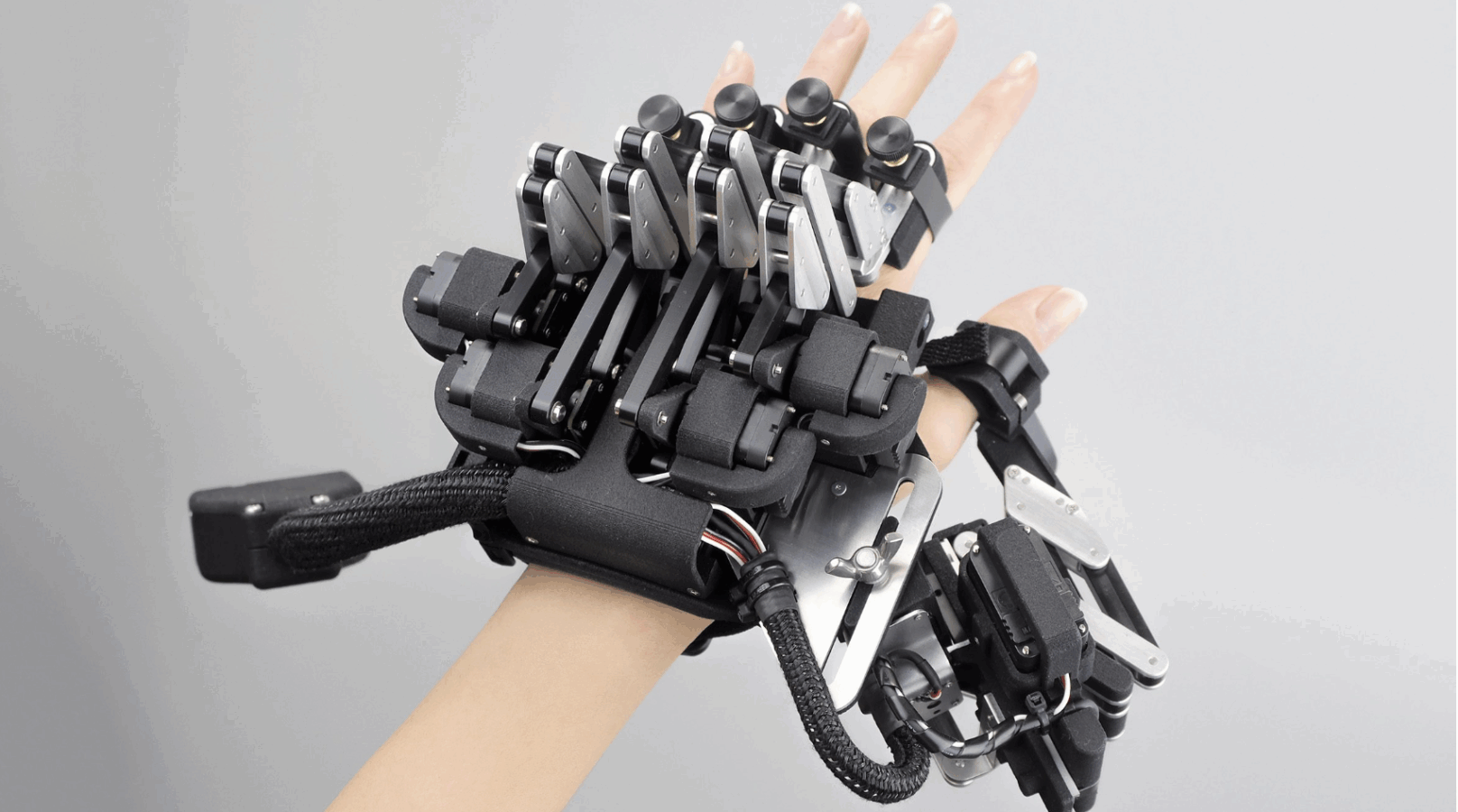
Finger-waggling exoskeleton helps pianists play faster – Dezeen
Japanese researchers have developed a groundbreaking training method using a robotic hand exoskeleton to help expert pianists improve their performance. After just one 30-minute session with the device, which triggers a fast, complex movement pattern, the pianists were able to play faster on their own—even in the hand that did not wear the exoskeleton. The researchers think a similar technique could be used in e-sports, surgery or handicrafts, helping people train beyond their natural physical limits.
How to enhance humans: finding ways to live much longer—and better—shouldn’t be left to the cranks – The Economist
A growing movement sees the human body as something to be hacked and enhanced, with figures like Bryan Johnson, Peter Thiel, and Elon Musk investing in life extension, brain implants, and performance-boosting drugs. But the industry blends hype with real science, leaving consumers unsure of what to trust. The article calls for governments to back stricter trials and rethink regulation—not just to treat illness, but to enhance healthy lives. It weighs the promise of better health and longevity against ethical concerns like inequality and consent, urging smart governance to ensure these advances benefit all, not just a few.
The TRENDIUM is a compendium of the latest trends impacting the
multi-trillion dollar global wellness economy.
Sign-up for monthly TRENDIUM emails.