
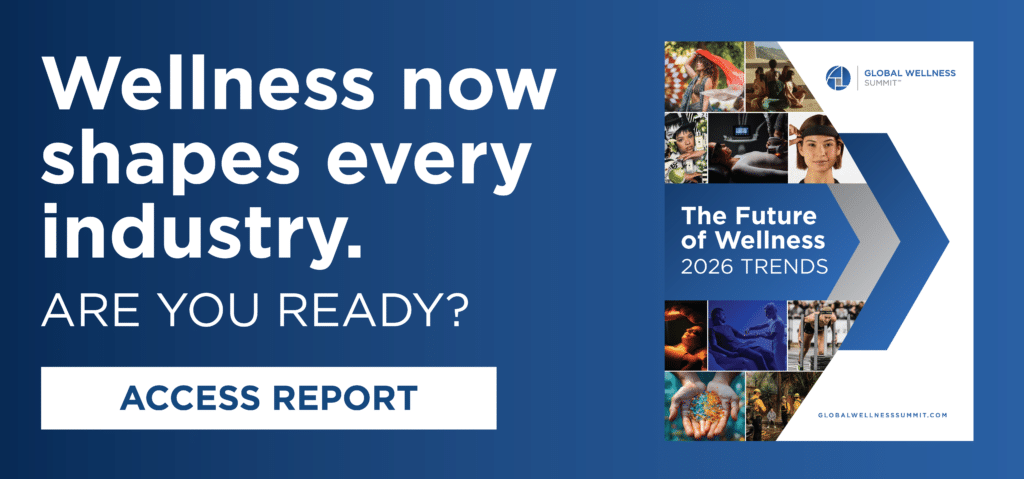

The Future of Wellness: 2026 Trends
Essential Insights for Business Leaders
Discover the top 10 trends shaping the future of the global wellness economy.
Backed by more than a decade of trusted forecasting from the Global Wellness Summit, this annual report goes beyond trend spotting to deliver expert analysis, real-world implications, and strategic insight for leaders, innovators, and investors. Used worldwide to anticipate what’s next in wellness, this is the definitive guide to the forces that will shape the industry in 2026 and beyond.

Jump to a Trend

Women Get Their Own Lane in Longevity
Men have dominated the longevity market, but the future is female.
The booming longevity market (like medicine decades before it) is tacitly male: women’s health is extrapolated from men’s data and protocols designed for men. That era is ending. Research is mounting that women age fundamentally differently, that the ovary functions as “command-central” for women’s health, and its decline dramatically accelerates systemic aging, leading to a cascade of conditions that women suffer more––and longer. In 2026, longevity pivots to women’s healthspan, moving beyond managing menopause symptoms to addressing ovarian aging itself, with interventions tailored to women at every life stage. Clinics, wellness resorts, telehealth platforms, wearables, diagnostics and gyms will all reorient toward women’s biology and needs––and the culture will shift too: less ultrahuman optimization; more human approaches. Learn More.

The Over-Optimization Backlash
Pushing back on peak wellness
We’re living through a modern wellbeing paradox: never before has health been so measurable—and never before has it felt so psychologically demanding. Sleep is scored, glucose is graphed, aging is tracked, and wellbeing has shifted from something we feel to something we perform correctly. While longevity research, diagnostics and health technology have undeniably expanded human potential, optimization without integration is proving costly. Therapists warn that data-driven wellness can tip from motivation into fixation, turning insight into pressure. As health data multiplies, many experience analysis paralysis rather than clarity, overwhelmed by constant self-tracking and fear of “getting it wrong.” These signals reveal the limits of an optimization-first model of wellness. Humans are sensory, relational and non-linear—and while optimization can fine-tune performance, it cannot replace agency, intuition or emotional coherence. What’s emerging now is not a rejection of science, but a recalibration: a shift toward regulation over results, sensation over scores, and wellbeing measured by how fully alive we feel. In 2026, the next phase of wellness moves beyond performance, towards emotional repair, nervous-system safety and embodied care. Learn More.

The Rise of Neurowellness
Regulating the nervous system is the next frontier of human health
Modern life keeps the nervous system in a near-constant state of activation, and neurowellness is emerging as a critical new frontier in health focused on regulation, recovery and resilience before breakdown occurs. The nervous system today is overwhelmed by nonstop digital stimulation, blurred work boundaries, artificial light, social media and global uncertainty—trapping many people in chronic low-grade fight-or-flight. This state contributes to poor sleep, anxiety, inflammation, hormonal imbalance, cognitive fog, weakened immunity and accelerated aging. Neurowellness responds by shifting care upstream, drawing on neuroscience, behavioral science, somatic practices, sensory design and consumer neurotechnology to train the nervous system rather than treat disease. Unlike traditional brain or mental health care, it focuses on building capacity and flexibility before pathology appears, supporting whole-body health in daily life. Often grounded in accessible, repeatable practices, neurowellness is rapidly expanding beyond individuals into hospitality, real estate, corporate wellness, consumer tech and longevity, with AI accelerating personalization and regulation—helping people move through modern life without living permanently in survival mode. Learn More.

Fragrance Layering
The new art of combining scents to create unique personalized identities
Fragrance layering—the art of combining scents to create a personalized olfactory signature—is changing the way we express ourselves, shape our moods, and interact with others. Once associated mainly with luxury and seduction, fragrance is re-emerging as a cultural and emotional language, echoing ancient traditions from Egypt, Arabia and India where scent signified ritual, status and meaning. Today, Gen Z and Millennials are reviving this heritage through experimentation, fueled by TikTok, indie fragrance communities and brands like Kayali and Rare Beauty that encourage mixing, mood-shifting and the creation of “fragrance wardrobes.” This rise of ‘smellmaxxing’ coincides with experimental cocktailing, social-coded scents and layering workshops, which transform fragrance into a participatory, skill-based hobby. Layering is extending beyond personal fragrance into spaces and experiences, with environments crafted to carry evolving aromas that shape mood and ritual. Technology is amplifying this, as smart fragrance systems and AI tools allow scents to shift dynamically throughout the day, responding to activity, context, or emotional state. In an era of homogenous beauty products, fragrance layering offers both creative freedom and social currency – a way to express identity, foster connection, and reclaim individuality through scent. Learn More.

Ready Is the New Well
Preparing for climate disaster is the new preventative wellness
Wellness has always promised protection—from disease, from burnout, from the slow erosion of mental health. But the next wave of wellness will promise something different: survival itself. Just as preventive medicine once transformed healthcare, disaster readiness is becoming the next evolution of everyday resilience, where having a disaster plan is as essential as having a fitness plan. This shift connects mental health, physical readiness, and community interdependence into one continuum of care. The implications for the global wellness economy are vast. Gyms and fitness studios will double as emergency shelters; wellness retreats will teach readiness; and demand for disaster-proof architecture will surge. But perhaps the greatest opportunity lies in the industry’s ability to hold both sides of the psychological spectrum at once—supporting people who live in chronic fear of what might happen, while also caring for those navigating the emotional fallout of what already has. As disasters become inescapable, the most forward-thinking companies will prioritize practical, proven solutions that put people’s minds at ease. Learn More.

Skin Longevity Redefines Beauty
Move over anti-aging: innovations in skin regeneration usher in a new era
A transformation is sweeping the beauty and wellness industries as “anti-aging” is rapidly being replaced by the concept of skin longevity. This emerging vertical merges cutting-edge biotech, proactive skincare and holistic wellness, reframing the conversation from reversing the unwanted effects of time to optimizing the skin’s health and function over the long term. Skin longevity honors skin as the body’s largest organ and a key marker of overall health, and is driven by demographic realities—people are living longer and seeking solutions to maintain long term health and vitality—and by a philosophical shift treating skin as a diagnostic tool and reflection of overall health. The movement is gaining significant momentum, backed by major investments and deep scientific research. Advances include sophisticated skin diagnostics, such as L’Oréal’s Cell BioPrint, and the development of new active ingredients and regenerative treatments. These innovations are creating a new age of personalized, preventative care. The trend extends beyond the face to encompass “hair longevity,” with a focus on scalp health and regenerative therapies for hair. Industry experts concur that skin longevity is a defining turning point in beauty and wellness, where the cross-pollination of science, biology and technology is unlocking unprecedented horizons for personalized, visible results and long-term health optimization. Learn More.

The Festivalization of Wellness
A new wave of healthy, wild, cathartic wellness raves and gatherings
A new wave of group wellness events is reshaping the global wellness landscape, marking the rise of the “festivalization of wellness.” These gatherings respond to widespread economic stress, social fragmentation and digital overload by prioritizing human connection, collective energy and emotional release. Inspired by festival and rave culture, wellness raves, sober morning dance events and multi-day immersions are reframing wellbeing as experiential, social and identity-driven rather than prescriptive or perfection-oriented. Spanning movement, music, sauna culture, learning and creative expression, they emphasize participation over performance and lower barriers to entry by creating judgment-free spaces where people explore what intuitively feels good. From Ibiza and Mexico to London, Seoul and Singapore, these events help participants find community, discover resonant practices and build healthier habits through joy rather than discipline. By making wellness playful, inclusive and culturally relevant, the festivalization of wellness is redefining health as belonging, connection and sustainable joy. Learn More.

Women & Sports: The Revolution Continues
More women become empowered as athletes as the women’s sports economy booms
Women’s sports are reaching a long-awaited tipping point, evolving from chronic underinvestment to a booming global economy with cultural, commercial and social impact. Fueled by shifting attitudes toward women’s strength, mental health and athletic identity, female athletes are gaining visibility as competitors, founders, creators and marketing powerhouses—while fandom, media coverage and grassroots participation surge worldwide. New leagues, women’s sports bars, record-breaking tournaments and major brand partnerships signal growing legitimacy, even as pay inequity, research gaps and structural sexism persist. Strength training and competitive sport are increasingly embraced by women of all ages, reframing fitness from aesthetics to capability and longevity, with benefits spanning physical and mental health. From Gen Z fans to menopausal lifters, from luxury fashion to pharma and wellness, women’s sports now touch nearly every sector. While challenges remain—especially around equitable investment and access—the momentum is clear: women athletes, entrepreneurs and fans are rewriting the rules of sport, reshaping cultural narratives around power and performance, and building a future where women’s sports are not niche, but central to the global sports and wellness economy. Learn More.

Tackling Microplastics as a Human Health Issue
We’ve grasped the severity of the microplastics crisis; this year is about action
By Professor Gerry Bodeker & Trent Munday
LinkedIn / LinkedIn
Microplastics have crossed a critical threshold—from an environmental problem to a direct human health concern. Once associated mainly with oceans and wildlife, these microscopic particles are now being detected in human blood, lungs, placentas and even the brain. Each year, an estimated 130 million metric tons of plastic enter the environment, breaking down into particles we ingest through bottled water and packaged food, inhale from synthetic clothing fibers in household dust, and absorb through everyday consumer products. Early research links this exposure to inflammation, hormonal disruption, cardiovascular disease and potential cognitive effects. As concern grows, the wellness and medical sectors are moving from observation to intervention. In London, private clinics are already offering costly treatments claiming to reduce microplastic loads in the body, while consumer-facing innovations such as plastic-free underwear are also emerging. Looking ahead, microplastics may become a routinely measured health marker—tracked alongside cholesterol or inflammation—and plastic exposure a factor shaping architecture, fashion, food systems and healthcare. The challenge now is not awareness, but whether society acts quickly enough to reduce exposure at the source, before the smallest pollutants create the largest health legacy. Learn More.

Longevity Residences
Healthspan finally comes home
A new category of “longevity residences” is emerging within wellness real estate, designed to support longer, healthier lives. Driven by rising life expectancy, an aging global population and a fast-growing longevity economy, these developments go beyond typical wellness real estate, integrating preventive medicine, advanced diagnostics, AI-enabled health tracking and therapeutic interventions directly into the home environment. The idea is simple: lasting health change happens not during a weeklong retreat, but in the environments we inhabit every day. Wellness real estate is already the fastest-growing sector of the wellness economy, and longevity-focused living is its next evolution. For now, most longevity residences are still in planning or early development stages, and most sit firmly in the luxury tier. But as diagnostics become cheaper and AI-driven healthcare scales, these concepts may trickle down—shaping how cities are designed, how people age in place, and how homes themselves become active partners in long-term health. Future homes may be judged not by square footage or amenities, but by how well they support healthspan across decades—transforming housing into an active participant in how we age. Learn More.
FAQs About the 2026 Wellness Trends
1) What is The Future of Wellness: 2026 Trends report?
It’s the Global Wellness Summit’s annual trends forecast that highlights the ideas, movements, and market shifts shaping wellness in the year ahead. This page provides short summaries of each 2026 trend, with links to access the full trend reports.
2) When is the 2026 Trends report released?
The Global Wellness Summit releases the 2026 Trends report on January 27, 2026. If you’re reading this before release day, the summaries may be published first, with full report access available via the trend links once the report is live.
3) How many trends are included in the 2026 report?
The 2026 edition includes 10 individual trends. Each trend on this page has its own section, summary, author attribution, and a link to the full report.
4) Who writes the 2026 trends?
Each trend is authored by a designated trends writer selected by the Global Wellness Summit. The authors are credited in each trend section and listed in the “Meet the 2026 Trends Writers” section, with links to their LinkedIn profiles.
5) Are the full trend reports free to read?
The full trend reports are typically gated. This summary page is designed to be freely accessible, while the “Read the full trend report” links may require a form submission, login, or other access step depending on the Global Wellness Summit’s distribution settings.
6) Can I share or cite these trends in my work?
Start with the trend titles and subtitles using the “Jump to a Trend” links, then read the summaries for the themes closest to your role or industry. Many readers begin with longevity, neurowellness, climate readiness, or microplastics because those trends tend to impact multiple sectors at once.
8) Will these trends impact business strategy in wellness, hospitality, beauty, and fitness?
Yes. The report is commonly used as a planning input for product roadmaps, programming, partnerships, and messaging across wellness-adjacent industries. The summaries provide an overview, while the full reports typically include deeper context, examples, and implications.
9) How do I access media or press resources for the trends release?
If you are a journalist, editor, or media partner, use the Global Wellness Summit’s official site navigation and contact pathways for press and communications. This page is intended to be a reference hub that media can link to when covering the 2026 trends.
10) Does this summary page link each trend to its author?
Meet the 2026 Trends Writers

Beth McGroarty
VP, Research & Forecasting, Global Wellness Summit, United States
Beth McGroarty is vice president of Research and Forecasting for the Global Wellness Institute (GWI) and the Global Wellness Summit (GWS). She has directed the GWS’s annual Wellness Trends Report for over a decade and authors The Trendium, a monthly analysis of emerging developments across the global wellness market. Beth also serves as editor of the GWI’s research-focused Global Wellness Brief and oversees WellnessEvidence.com, the first online resource dedicated to the medical evidence supporting dozens of wellness approaches. She is frequently quoted in major global media outlets on wellness industry insights and trends.
Trend contributed: Women get their own lane in longevity
Back to trend list

Jessica Smith
Strategist & Co-founder, MAYAH, United Kingdom
Jessica Smith is a trends researcher, strategist and co-founder working at the intersection of beauty, wellness and culture. With over a decade shaping future-facing thinking, she has contributed strategic insight to global brands including LVMH, Estée Lauder, Lululemon, L’Oréal and Remedy Place. She is also the co-founder of MAYAH, a new personal care brand redefining body care across the full motherhood journey, built on clinically backed formulations and a cultural reframe of maternal wellbeing. Formerly a senior Strategic Futures analyst at The Future Laboratory, Jessica is a recognized authority on trends and consumer behavior. Her writing and insights have been featured in Vogue, The Times and Harper’s Bazaar.
Trend contributed: The Over-Optimization Backlash
Back to trend list

Heidi Moon
VP Marketing & Communications, Global Wellness Summit & Global Wellness Institute, United States
With strong expertise in strategic business planning, management and communications, Heidi Moon is a trusted advisor in the business of wellness with three decades of experience in seven countries. She consults to, and has led, pioneering spas, integrative wellness centers and wellness real estate projects. As VP of Marketing & Communications for both GWS and GWI, she drives the global visibility of these two leading organizations, shaping narratives that influence the direction of the wellness industry. Heidi has an MBA from Columbia Business School and a BA in Economics.
Trend contributed: The Rise of Neurowellness
Back to trend list

Olivia Houghton
Insights & Engagement Director, LS:N Global, The Future Laboratory, United Kingdom
Olivia Houghton is Insights and Engagement director at The Future Laboratory, where she leads research across beauty, health and wellness, connecting foresight analysis with strategic client engagement. With over eight years’ experience, Olivia has a deep understanding of evolving market dynamics and shifting consumer behaviors, making her a trusted industry voice. She regularly contributes to leading publications, including Vogue and the Financial Times, and speaks at major industry events such as the Global Wellness Summit—where she is a key contributor to the annual Trend Report—MakeUp In and Cosmetics Business Live.
Trend contributed: Fragrance Layering
Back to trend list

Cecelia Girr
Journalist & Cultural Strategy Director, Backslash, United States
Cecelia is both journalist and strategy director for Backslash, the cultural intelligence unit of Omnicom Advertising Group. She leads strategy for Backslash’s annual report of global cultural shifts, and is the co-founder of Backslash’s zine, ED\GE. During her time in brand strategy, she has worked across categories ranging from food and entertainment to telecommunications and technology. She has also led branding work and integrated campaigns for the Golden Globes, Postmates and UNICEF.
Trend contributed: Ready Is the New Well
Back to trend list

Skyler Hubler
Journalist & Senior Cultural Strategist, Backslash, United States
Skyler Hubler is a journalist and senior cultural strategist at Backslash, the cultural intelligence unit of Omnicom Advertising Group. In her role, she works across categories to help today’s biggest brands stay one step ahead of cultural change. She was also a staff writer on Backslash’s debut zine, ED\GE: Age of Wellness and has proudly contributed to the Global Wellness Summit’s annual trend report for five years.
Trend contributed: Ready Is the New Well
Back to trend list

Claire McCormack
Claire McCormack
Senior Editor, Beauty Independent, United States
Claire McCormack is a senior editor at digital publication Beauty Independent, covering the beauty, wellness and personal care industries. She is a thought leader, writer and speaker on beauty and wellness business, trends and consumer behavior, with a deep expertise in the sexual wellness consumer goods market. Claire’s work has been a featured expert in CNBC, Adweek, The Washington Post, Business of Fashion, WGSN, Stylus, the HBO documentary Not So Pretty and others.
Trend contributed: Skin Longevity Redefines Beauty
Back to trend list

Megan Whitby
Freelance Journalist & Brand Manager, Myndstream, United Kingdom
Megan Whitby is a freelance journalist specializing in the global spa, wellness and hospitality sectors and brand manager at wellness music brand Myndstream. Based in London, she has spent the past seven years immersed in the wellness industry, developing a deep understanding of the global market, its key players and the dynamics shaping the sector. She began her career as assistant editor at Spa Business magazine, traveling internationally to cover concept launches, investment activity and market developments, gaining a front-row view of the sector from the ground up. This editorial foundation informs her current work in brand strategy and marketing, bringing a strong storytelling lens and commercial awareness to her role at Myndstream. With experience spanning journalism, brand management and wellness communications, Megan brings a 360° perspective on the global wellness industry, seeing how ideas, people and opportunities connect across the sector.
Trend contributed: The Festivalization of Wellness
Back to trend list

Amy Eisinger
Writer, Editor & Digital Creator, Well+Good, United States
Amy is a writer, editor and digital creator who covers health and wellness. For the past 15 years, she’s led creative teams at Well+Good, SELF, New York Post and The Messenger, and written for the New York Daily News, The Washington Post, LA Times, Cosmopolitan, Glamour, and Allure, among others. During her tenure at SELF, the brand earned multiple Webby Awards, MM+M Awards and several ASME nominations and one win. Amy is the author of the Substack Way Beyond Well, and has appeared as a guest on TODAY, Good Day New York, Access Hollywood, KTLA, and numerous podcasts and panels. She was also the host of the Sweat With SELF YouTube series. She graduated summa cum laude from the University of Florida with a double major in English and Classical Studies before receiving her MA in Journalism from New York University.
Trend contributed: Women & Sports: The Revolution Continues
Back to trend list

Professor Gerry Bodeker
Public Health Researcher, Academic & Member, Green Templeton College, University of Oxford, Malaysia & United Kingdom
Harvard-trained public health academic professor Gerry Bodeker, PhD, researches, advises and publishes on integrative medicine and wellness. He taught medical sciences at Oxford for two decades and is adjunct professor of epidemiology at Columbia. A Fellow of the International Union of Pure and Applied Chemistry, he’s worked with UN agencies, advised National Geographic, and was senior consultant for Dr. Sanjay Gupta’s CNN series Chasing Life. He chairs GWI’s Mental Wellness Initiative and co-chairs GWI’s Microplastics Watch Initiative.
Trend contributed: Tackling Microplastics as a Human Health Issue
Back to trend list

Trent Munday
Senior Vice President International, Mandara Spa, Thailand
Trent Munday is a seasoned executive in the global wellness industry and currently serves as senior vice president of Mandara Spa, a division of OneSpaWorld (Nasdaq: OSW), a worldwide provider and innovator in the fields of wellness, beauty, rejuvenation and transformation across the globe. With over 30 years of experience across more than 30 countries, Trent’s background spans both wellness and hotel operations, including leadership roles with renowned hospitality brands such as Six Senses and COMO Hotels & Resorts, where he was the opening general manager of Uma Ubud in Bali. Trent has written extensively for numerous hospitality, spa and wellness publications and is also the host of over 1,500 podcast episodes.
Trend contributed: Tackling Microplastics as a Human Health Issue
Back to trend list

Jane Kitchen
Media & Trends Analyst, Global Wellness Summit, United Kingdom
Jane Kitchen has a 20-year career in journalism, specializing in the spa and wellness industry. She is editor-at-large at Spa Business magazine and has traveled the world in the name of wellness—writing first-person features on the latest spa openings, interviewing some of the most influential people in the industry and examining trends shaping the marketplace. She is also the editor of the annual Spa Business Handbook, a key resource for wellness professionals, co-author of its annual Spa Foresight report and a regular contributor to the Global Wellness Summit’s annual trend report.
Trend contributed: Longevity Residences
Back to trend list