
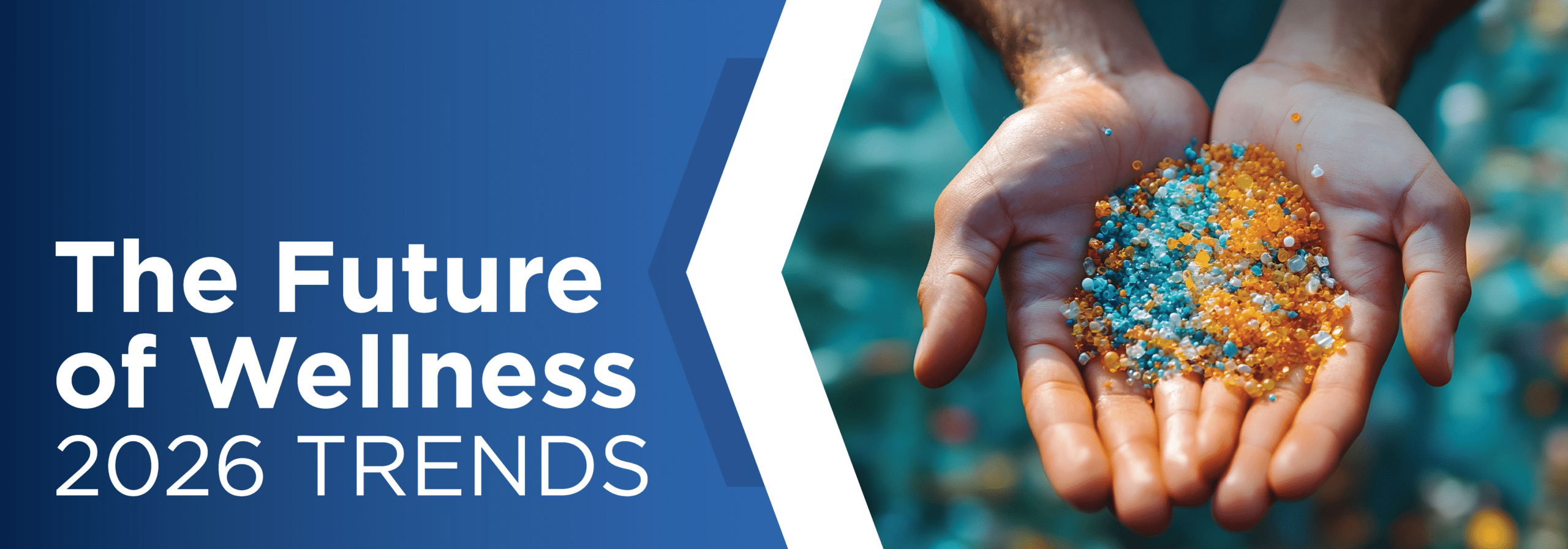

TREND #9: Tackling Microplastics as a Human Health Issue
We’ve grasped the severity of the microplastics crisis; this year is about action
By Professor Gerry Bodeker & Trent Munday
Overview
Microplastics have crossed a critical threshold—from an environmental problem to a direct human health concern. Once associated mainly with oceans and wildlife, these microscopic particles are now being detected in human blood, lungs, placentas and even the brain. Each year, an estimated 130 million metric tons of plastic enter the environment, breaking down into particles we ingest through bottled water and packaged food, inhale from synthetic clothing fibers in household dust, and absorb through everyday consumer products. Early research links this exposure to inflammation, hormonal disruption, cardiovascular disease and potential cognitive effects. As concern grows, the wellness and medical sectors are moving from observation to intervention. In London, private clinics are already offering costly treatments claiming to reduce microplastic loads in the body, while consumer-facing innovations such as plastic-free underwear are also emerging. Looking ahead, microplastics may become a routinely measured health marker—tracked alongside cholesterol or inflammation—and plastic exposure a factor shaping architecture, fashion, food systems and healthcare. The challenge now is not awareness, but whether society acts quickly enough to reduce exposure at the source, before the smallest pollutants create the largest health legacy.
Purchase Report | View All 10 Trends | GWS Writers Page
Tackling Microplastics as a Human Health Issue: Key Questions & Answers
1. What are microplastics, and why do they matter now?
Microplastics are tiny fragments of plastic that come from larger materials breaking down or from products designed with small particles. What’s changed is where they’re showing up, not just in oceans, but in our bodies.
2. How are microplastics entering the human body?
Through what we eat, drink, and breathe. They’ve been found in water, food, air, and even everyday products, making exposure nearly constant in modern life.
3. Is this really a health issue or just an environmental one?
It’s both. What started as an environmental concern is now being reframed as a human health issue, with links to inflammation, hormone disruption, and other systemic effects.
4. How widespread is the problem?
Extremely widespread. Scientists have detected microplastics in blood, lungs, placentas, and even brain tissue, which suggests they can move throughout the body in ways we’re only beginning to understand.
5. What are the potential health risks?
Early research points to chronic inflammation, endocrine disruption, fertility issues, and possible neurological effects. While the science is still evolving, the direction of concern is clear.
6. Why is this becoming a wellness conversation now?
Because wellness has always focused on reducing invisible stressors. Microplastics represent a new category of exposure, one that connects environment, lifestyle, and long-term health in a very direct way.
7. Can the body remove microplastics on its own?
The body has natural detox systems, like the liver and kidneys, but they weren’t designed to process synthetic polymers. This raises new questions about accumulation and long-term impact.
8. What role can the wellness industry play here?
A significant one. From educating consumers to reformulating products and reducing plastic use, wellness brands can help shift behavior and set new standards around “microplastic-conscious” living.
9. Are there real solutions emerging?
Yes, but they’re early. Innovations range from plastic-free materials and filtration systems to dietary strategies and experimental detox approaches. Prevention, reducing exposure, is still the most immediate and effective step.
10. What’s next for this trend?
Microplastics could become a core health metric, something people track and manage like stress or sleep. The bigger shift is cultural: moving from convenience-driven consumption to more conscious, lower-plastic living.
Meet the Author

Professor Gerry Bodeker
LinkedIn | GWS writer page
Public Health Researcher, Academic & Member, Green Templeton College, University of Oxford, Malaysia & United Kingdom
Harvard-trained public health academic professor Gerry Bodeker, PhD, researches, advises and publishes on integrative medicine and wellness. He taught medical sciences at Oxford for two decades and is adjunct professor of epidemiology at Columbia. A Fellow of the International Union of Pure and Applied Chemistry, he’s worked with UN agencies, advised National Geographic, and was senior consultant for Dr. Sanjay Gupta’s CNN series Chasing Life. He chairs GWI’s Mental Wellness Initiative and co-chairs GWI’s Microplastics Watch Initiative.

Trent Munday
LinkedIn | GWS writer page
Senior Vice President International, Mandara Spa, Thailand
Trent Munday is a seasoned executive in the global wellness industry and currently serves as senior vice president of Mandara Spa, a division of OneSpaWorld (Nasdaq: OSW), a worldwide provider and innovator in the fields of wellness, beauty, rejuvenation and transformation across the globe. With over 30 years of experience across more than 30 countries, Trent’s background spans both wellness and hotel operations, including leadership roles with renowned hospitality brands such as Six Senses and COMO Hotels & Resorts, where he was the opening general manager of Uma Ubud in Bali. Trent has written extensively for numerous hospitality, spa and wellness publications and is also the host of over 1,500 podcast episodes.
Watch Author Video
From the 2026 New York Media Event
Discover the top 10 trends shaping the future of the global wellness economy.
Backed by more than a decade of trusted forecasting from the Global Wellness Summit, this annual report goes beyond trend spotting to deliver expert analysis, real-world implications, and strategic insight for leaders, innovators, and investors. Used worldwide to anticipate what’s next in wellness, this is the definitive guide to the forces that will shape the industry in 2026 and beyond.

- Women Get Their Own Lane in Longevity
- The Over-Optimization Backlash
- The Rise of Neurowellness
- Fragrance Layering
- Ready Is the New Well
- Skin Longevity Redefines Beauty
- The Festivalization of Wellness
- Women & Sports: The Revolution Continues
- Tackling Microplastics as a Human Health Issue
- Longevity Residences