

Wellness 2026: Four Key Themes Emerge
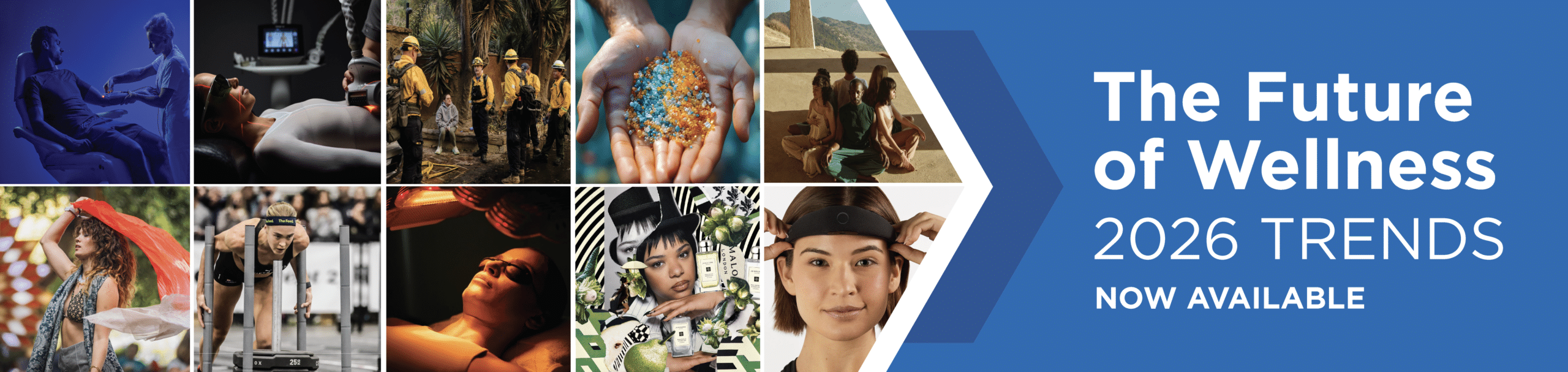
The GWS’s new The Future of Wellness 2026 Trends report identifies ten trends that will transform health and wellness in 2026 and beyond.
The comprehensive 150-page report delivers the complete picture: rigorous research, real-world case studies, the people and brands moving the needle, and our team’s informed forecasts on what will define the market’s next chapter.
Across the trends, four key themes emerge…
1. A Backlash Against Over-Optimization & ‘Everything-Maxxing’


We’ve had years of tracking each step, scoring every sleep, and a longevity market that demands constant optimization to reach age 120, while oft forgetting how to live the years in between. The future? A backlash against stressful, high-tech, performative wellness and a surge in experiences that elicit what humans actually are: imperfect, emotional, relational and sensory–– hardwired to seek pleasure, joy and self-expression. Several trends reveal how wellness will now pivot to meaning over measurement and catharsis and connection over clinical data.
“The Over-Optimization Backlash”: A framing trend, it details how wellness is shifting toward regulation over results, sensation over scores, and wellbeing measured by how fully alive we feel––and how we’re moving beyond performance, towards emotional repair and embodied care.
“The Festivalization of Wellness”: Healthy, wild and cathartic wellness raves and gatherings will rise globally––from sober morning dance raves to multiday festivals––that use dance, music and creative expression. Wellness-as-rave redefines the category as magic, ritual and profound collective emotional release.
“Fragrance Layering”: Fragrance has long been stuck as a luxury category and deadened by corporate branding and product homogeneity. Now the ancient art of combining scents to create a personalized olfactory signature will get a modern reimagining, with fragrance becoming a radically creative cultural and emotional language that will change how we express ourselves, shape our moods, and interact with others.
2. A Big Year for Women

There will long overdue corrections of inequities in multi-billion-dollar markets in 2026: longevity and sports.
“Women Get Their Own Lane in Longevity”: The men-dominated longevity market has extrapolated regimes for women based on men’s data and protocols. But the future is female. Research mounts that women age fundamentally differently, with the ovary as the “command central” of women’s health, and its decline (aka menopause) dramatically accelerating systemic aging, leading to a surge in conditions women suffer more and longer. Women scientists are working hard on innovations that could slow ovarian aging. And the wellness market will move beyond managing menopause to address women’s healthspan, with new diagnostics and interventions targeted for every life stage. Every market––clinics, wellness resorts, telehealth platforms, wearables, diagnostics and gyms––is reorienting towards serious approaches to women’s health and longevity.
“Women & Sports: The Revolution Continues”: Men have eternally dominated sports, but the women’s sports economy is at its long-awaited tipping point, with huge cultural, commercial, social and wellness impact. Female athletes have unprecedented visibility as competitors, founders and marketing powerhouses—while fandom, media coverage and grassroots participation surges worldwide. Welcome to a world of new leagues and women’s sports bars––while “regular” women of all ages flock to strength training and competitive sport, reframing fitness from aesthetics to capability.
3. Longevity Moves in New Directions

In three short years, longevity has become a powerful new sector that sits both within and alongside wellness. Beyond women rewriting the market, longevity will also take new directions in real estate and beauty in 2026.
“Longevity Residences”: Longevity is moving out of clinics and resorts and into the places we live. This new category within wellness real estate supports longer, healthier lives by integrating preventive medicine, advanced diagnostics, AI-enabled health tracking and therapeutic interventions directly into the home. It makes nothing but sense: lasting health change isn’t born from a week-long retreat but in the environments that we inhabit every day.
“Skin Longevity Redefines Beauty”: A transformation is sweeping beauty and wellness as “anti-aging” is rapidly being replaced by the concept of skin longevity. This new vertical merges cutting-edge biotech, proactive skincare and holistic wellness, reframing the conversation from reversing the effects of time to optimizing the skin’s health and function long term. Backed by major investments and new scientific research, advances include sophisticated skin diagnostics, new active ingredients and regenerative treatments, even “hair longevity.”
4. Wellness Will Take on Major Environmental & Human Crises

Ours is an age of accelerating crises, from terrifying climate events to our brains being barraged by bad news and bad information. Unsustainable anxiety levels are one reason the wellness market is thriving. Tackling very different and mounting crises becomes central in wellness next year.
“Ready Is the New Well”: In 2025, climate disasters and eco-anxiety became the new normal. If wellness has always promised prevention and protection, the next wave promises something different: survival itself. Having a disaster plan will become as essential as having a fitness plan––and we’ll see a new focus on mental resilience and treating climate anxiety, physical readiness, and community organizing and interdependence. This new preventative continuum of care is not about panic but peace of mind.
“Tackling Microplastics as a Human Health Issue”: In 2025 we grasped the severity of the microplastics crisis as a human health threat. Now detected in human blood, lungs, placentas and even the brain, early research links microplastic exposure to inflammation, hormonal disruption, cardiovascular disease and potential cognitive effects. In 2026 we shift from awareness to action––in wellness, but also in food systems, medicine, architecture and fashion, with a surge in consumer innovations and therapies that can reduce microplastic loads in the body.
“The Rise of Neurowellness”: Modern life, from nonstop digital overload to rising global unrest, keeps our nervous systems in a chronic state of fight-or-flight, leading to everything from hormonal imbalances to accelerated aging. Regulating the nervous system is the next frontier in wellness, going far beyond “stress-reduction” to focus on recovery and resilience before breakdown occurs. We’ll see far more neurowellness approaches, from new consumer neurotech to sensory design to somatic practices.
 |