

Trend: Ready is the New Well
Week of June 17th, 2026
On the Ground with Los Angeles’s Volunteer Fire Brigade—Vogue
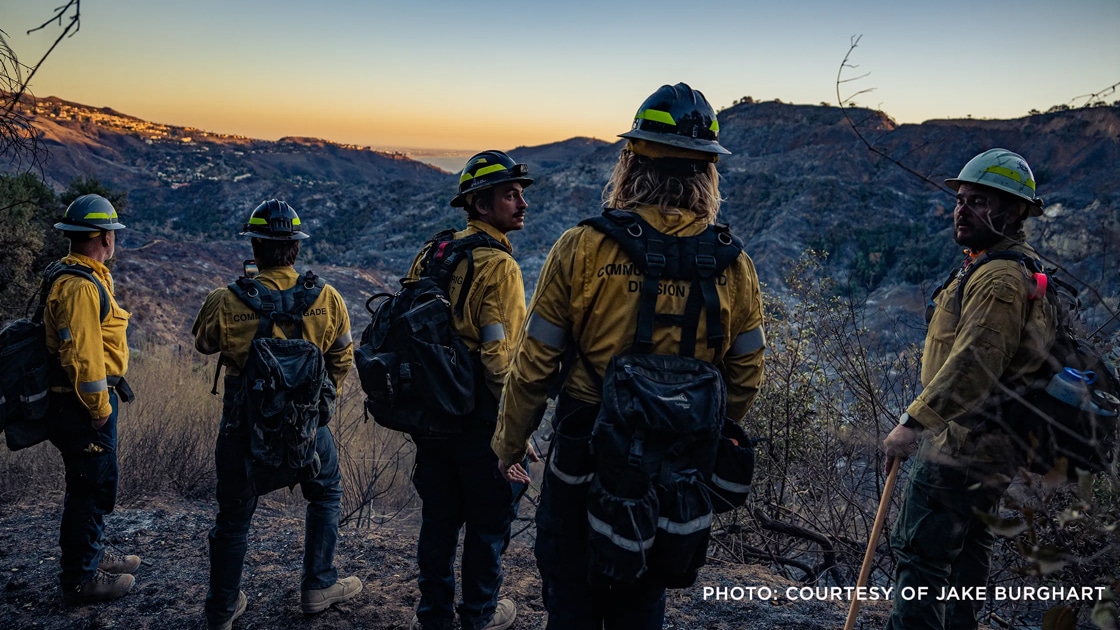
In the wake of devastating fires in 2019 in California, the Community Brigade formed, a cowboy collective of friends and neighbors in Malibu (from surfers to artists) who have become the pillar of community response in preparing, responding to, and recovering from accelerating wildfire disasters. They’ve now been formally trained and armed with the right equipment, and work with LA government organizations. They do brush removal, work on structural building vulnerabilities, bring medications and water—or just emotional support and hugs—to those in crisis. It’s the first program of its kind in the US, and a new kind of wellness community that empowers people to become their own heroes and builds fire prepared and adapted communities block by block.
Emerging Wellness Trend: Disaster-Proof Architecture–Forbes
Sparked by the GWS trend, this covers how designing disaster readiness into homes and structures extends beyond merely safeguarding the built environment. It secures the safety, health and psychological wellbeing of building occupants—ensuring air and water quality, hazard reduction and ongoing power access. Experts discuss how “disaster resilience as the first principle of building” is rising fast, because for more people in disaster-prone areas, it’s not a question of if, but what day. The article looks at some pioneers, such as Babcock Ranch in Florida which boasts storm-hardened buildings, nature-integrated water management, smart pond technology, hardened underground utilities and native vegetation that enabled the community to emerge virtually unscathed from three recent catastrophic hurricanes. With Hurricane Ian, the development stood strong against winds of 100 miles per hour for eight hours without flooding or the loss of power or Internet, and with fully operational water utilities.
How to Counsel for Climate Anxiety—Non-Profit Quarterly
Therapists from Germany to the UK to the US are seeing far more patients struggling with climate anxiety and eco-grief, now even dominating some therapy practices. But without funding into research and proper training, most therapists aren’t equipped to deal with an issue that differs greatly from traditional therapy’s ethos of just treating the individual, because being eco-aware means recognizing that “the climate crisis is both a global threat to all life on Earth and a deeply personal threat to … each individual.” Mental health professionals are making do and creating the tools they need, banding together to form groups like the Climate Psychology Alliance, which has seen membership double since 2023. The need for training in climate-aware mental health is urgent, and experts predict there will be many new approaches in coming years.
Worsening Weather Is Driving Smarter Behavioral Interventions from Psychologists–American Psychological Association “Emerging Trends” report
Psychologists are developing tools and strategies to help people understand the risk of extreme weather and take action. Much is underway: they’re studying people’s response to risk to help design clear and emotionally resonant warning messages; they’re helping design preparedness systems that move beyond individual responsibility; and they’re key to developing interventions for climate-related anxiety linked to extreme weather, ensuring that mental health responses are as systemic as the challenges themselves. Studying how community ties influence readiness and response, they know that motivating whole communities, not just individuals, is crucial. In New Zealand, disaster readiness improved when residents were encouraged to form connections through “know your neighbor” campaigns and when local governments invested in shared spaces like community halls and gardens. Psychologists are even working on climate-ready schools.
The Future of Wellness report goes in depth on ten trends that will transform wellness in 2026 and beyond. It can be purchased HERE.